I. The Scourge of Ages
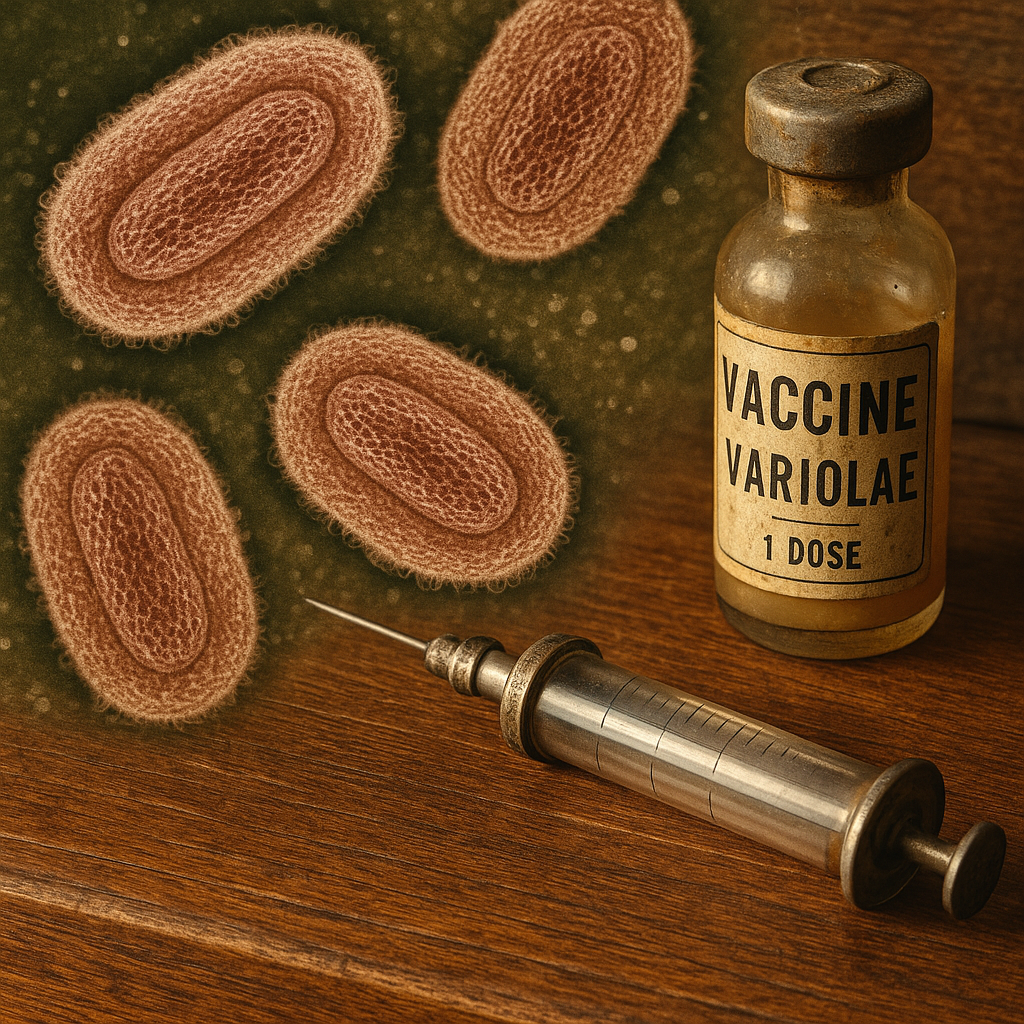
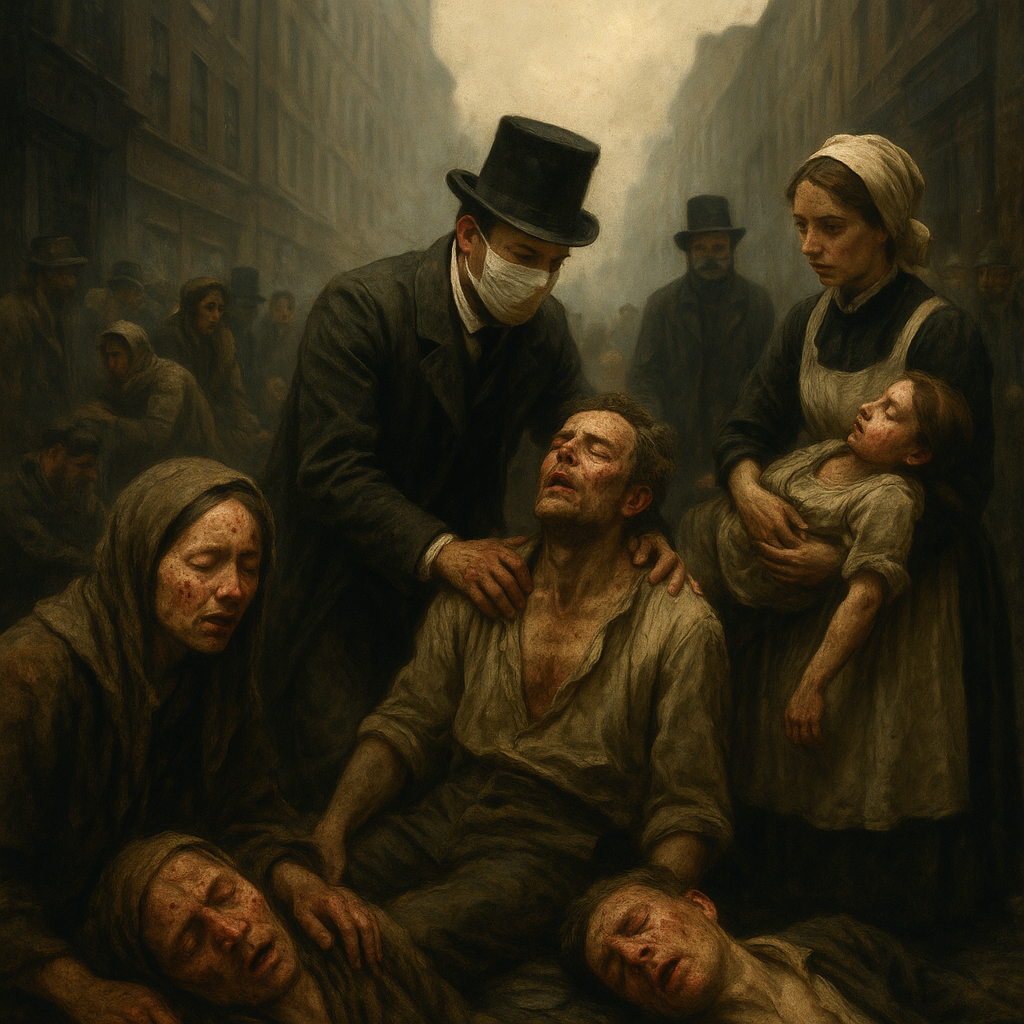
Before COVID-19, before the 1918 influenza, there was smallpox—a disease so terrifying that it inspired its own deity in the Yoruba religion (Sopona) and whose victims were sometimes cast out of their communities before death. Caused by the variola virus, a member of the poxvirus family, smallpox was brutally efficient. After a 7-to-17-day incubation, victims suffered sudden high fever, severe headache, back pain, and vomiting—the prodromal phase. Then came the rash: first flat red spots in the mouth and throat, then spreading to the face, forearms, hands, and eventually the entire body. Within days, these lesions filled with opaque fluid, becoming the hard, round pustules that gave the disease its name.
The mortality rate hovered around 30% for ordinary variola major. In the more virulent variola major strain called "flat-type" or "hemorrhagic," death approached 100%. Survivors often emerged with deep, pitted scars (pockmarks) across their faces, and corneal ulceration leading to blindness was common—smallpox was a leading cause of blindness well into the 20th century.
Lethal efficiency — 30% case fatality rate for ordinary smallpox; contagious before the rash appears, transmitted via droplets, pustular fluid, and contaminated linens. The virus remained viable on surfaces for days.
In crowded tenements, army barracks, or slave ships, it spread like a brushfire.
II. Apocalypse and Empire
Smallpox had no respect for geography—until it encountered the immunologically naïve. When European explorers and colonists arrived in the Americas, they unknowingly carried a weapon far deadlier than gunpowder. From the Aztec capital Tenochtitlán (where an outbreak during a siege killed the emperor and shattered resistance) to the Inca heartland, smallpox preceded or accompanied conquistadors, killing an estimated 90% of indigenous populations in some regions over a century. The demographic collapse was so sudden and profound that it not only cleared land for settlement but also broke the psychological and social fabric of entire civilizations.
Similar devastation followed in Australia, the Pacific islands, and southern Africa. In some cases, the disease was deliberately weaponized. The most infamous—and possibly apocryphal—example is the 1763 distribution of smallpox-contaminated blankets by British officers to Delaware Indians, though documented instances of intentional transmission during the French and Indian War leave little moral ambiguity.
By the early 20th century, even as hygiene and early vaccines reduced outbreaks in Europe and North America, smallpox was still killing an estimated 300 million people worldwide—more than all wars, famines, and plagues combined during that century alone. In 1967, the World Health Organization (WHO) estimated 10–15 million new cases annually, with two million deaths.
III. The Vaccine Revolution
Long before germ theory, humans observed that survivors of smallpox never caught it again. The ancient practice of variolation—deliberately inhaling or inoculating scab material from mild cases—was documented in China, India, and the Ottoman Empire. The method was risky (2–3% died from the induced infection) but far less deadly than natural disease (30%).
The true turning point arrived in 1796. Edward Jenner, a country physician in Gloucestershire, England, noted that milkmaids who caught cowpox—a mild, pustular disease from cattle—were immune to smallpox. He inoculated young James Phipps with material from a cowpox sore on the hand of milkmaid Sarah Nelmes. Phipps developed mild fever and a sore, but when Jenner later deliberately exposed him to smallpox (a risky and today unthinkable procedure), the boy remained healthy.
Jenner’s “vaccination” (from vacca, Latin for cow) spread across Europe and the Americas within a decade, despite fierce opposition from anti-vaccination leagues, religious groups, and medical traditionalists.By the mid-20th century, freeze-dried, heat-stable vaccines and the bifurcated needle—a simple, reusable device requiring minimal training—made mass campaigns possible even in remote jungles and deserts.
IV. The Grand Campaign: 1967–1980
In 1959, the WHO proposed a global eradication program, but it lacked funding, political will, and coordination. That changed in 1967 with the launch of the Intensified Smallpox Eradication Programme under American epidemiologist D.A. Henderson. The strategy was revolutionary: surveillance-containment. Instead of vaccinating entire populations (impossible in many regions), teams would identify every outbreak, rapidly vaccinate everyone within a 1.5-mile radius, and isolate patients in cordoned-off “smallpox hospitals.”
Ring vaccination Vaccinate contacts of contacts, creating an immune firewall. Search & containment Health workers fanned out by foot, bicycle, boat, and elephant, offering rewards for reporting cases. Bifurcated needle Required only a single drop of vaccine and a single puncture — cheap, effective, and easy to sterilize.The campaign faced staggering obstacles: civil wars in Nigeria and Ethiopia, the Bangladesh Liberation War, and deep suspicion of foreign doctors. Yet thousands of national and WHO staff persisted. The last natural case of variola major occurred in Bangladesh in 1975. The last case of the milder variola minor—and the last natural case of smallpox anywhere—was diagnosed in Ali Maow Maalin, a hospital cook in Merca, Somalia, on October 26, 1977. (Maalin survived and later worked for the polio eradication campaign before dying of malaria in 2013.)
After two years of intensive global surveillance, the World Health Assembly declared smallpox eradicated on May 8, 1980. No celebration in public health history compares.
V. Aftermath and Shadows
Only two official repositories of live variola virus remain: the Centers for Disease Control and Prevention (CDC) in Atlanta, Georgia, and the State Research Center of Virology and Biotechnology (VECTOR) in Koltsovo, Russia. Their continued existence is fiercely debated — some argue for destruction to eliminate the last bioterror threat; others insist the virus is essential for developing antiviral drugs and next-generation vaccines against poxviruses that may jump from animals.
The legacy of smallpox extends far beyond its eradication:
- It gave us the concept of herd immunity and the first vaccine.
- It established the framework for global disease surveillance and rapid response.
- It taught that with sufficient coordination, political will, and community trust, even a perfect predator can be vanquished.
Yet the story carries warnings. Smallpox was eradicated because it had no animal reservoir (humans were the only host), visible symptoms made it trackable, and an effective, inexpensive vaccine existed. COVID-19, HIV, and malaria lack one or all of these features.
And there remains the unthinkable: synthetic biology. In 2017, Canadian researchers synthesized horsepox, a relative of smallpox, for $100,000 using mail-order DNA. The same could be done for variola. Smallpox is the only human disease we have erased from nature—but not from the realm of possibility.
VI. A Testament and a Torch
The story of smallpox is not merely medical history; it is a human epic. It is the story of a world that accepted child death as normal, of scarred faces hidden behind veils, of rulers who feared the disease more than rebellion. And it is the story of how that world, through curiosity, courage, and collective action, chose to build a different future.
Today, when you receive a childhood vaccine, you owe a debt to Jenner and to the thousands of nameless vaccinators who walked for days to reach a single hut. When global health officials speak of “disease surveillance” or “containment rings,” they are speaking a language written in the final war against smallpox. And when humanity eventually eradicates polio, Guinea worm, or someday malaria, it will be walking a path first cleared in the shadow of the virus that taught us we could win.
“Smallpox is dead. Long live the principle that we can unite to defeat our common enemies.” — Adapting the ancient monarch’s cry to the modern world’s greatest public health victory.